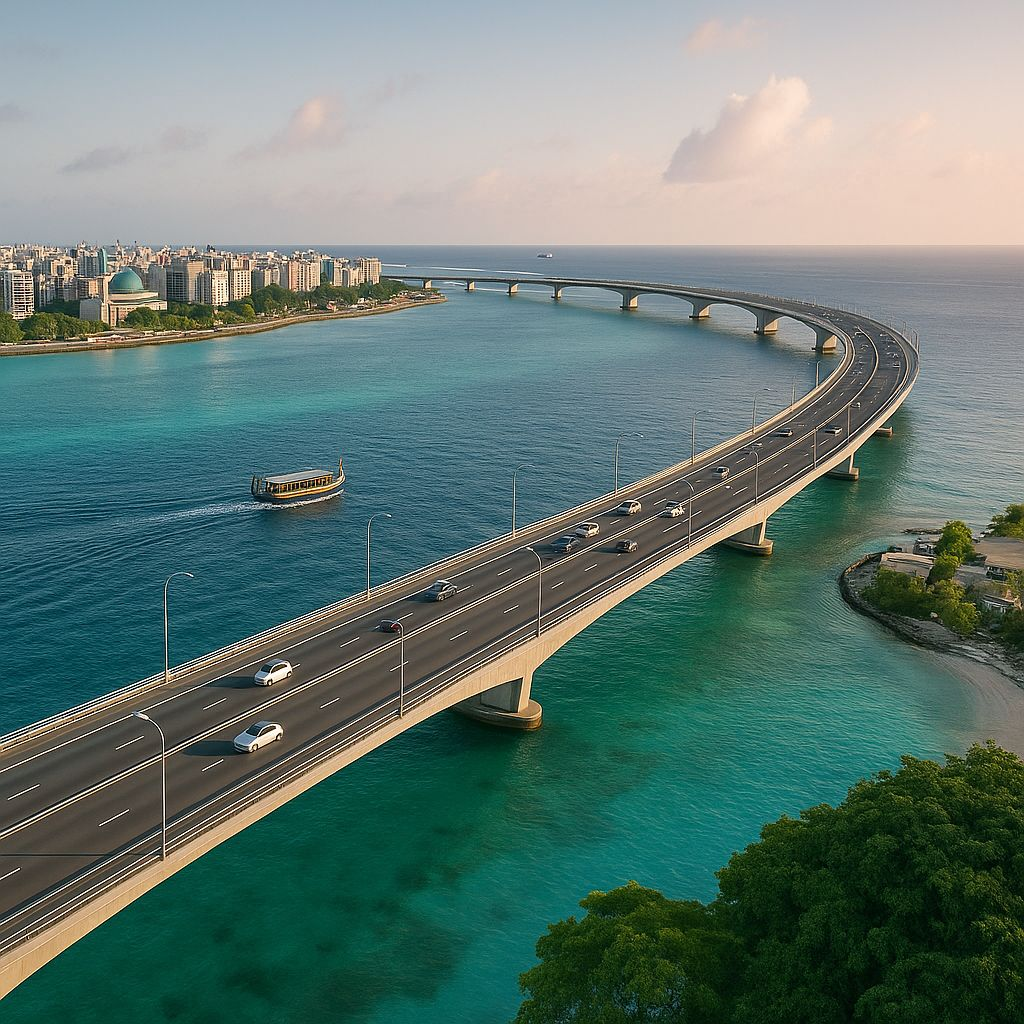
The Maldives is more than a picturesque backdrop for luxurious holidays. It’s a living example of how infrastructure, the blue economy, and green growth must converge — especially for Small Island Developing States (SIDS). For investors, developers and governments focused on next-generation opportunities, the archipelago offers a strategic landscape where challenge equals potential.
Why the Maldives matters
• The Maldives’ blue economy — i.e., the economic value derived from its oceans and islands — already accounts for over 36% of GDP.
• The country’s vulnerability to sea-level rise, extreme weather and isolation means that resilient infrastructure isn’t optional — it’s foundational.
• Policymakers are clear: the ocean isn’t merely a resource — it’s the economy. “For Large Ocean States like the Maldives … the economy is closely tied to ocean ecology.”
Key infrastructure trends driving the blue-green transition
1. Connectivity & transport infrastructure
The archipelago’s geography means that inter-island bridges, modern harbours, airport upgrades and better maritime links are critical. These serve not just tourism, but logistics, supply chains, medical access and workforce mobility.
2. Resilient & low-carbon energy systems
Given heavy reliance on imported diesel, shifting to renewables, waste-to-energy plants and micro-grids enables both cost savings and a cleaner economy. The country’s updated NDC underscores efforts to increase renewables and upgrade infrastructure for resilience.
3. Marine-based infrastructure and ecosystem services
Coral reefs, seagrass beds and mangroves aren’t just beautiful—they’re protective natural infrastructure. Investing in their conservation & restoration counts as infrastructure investment, because it underpins tourism, fisheries, real-estate value and climate resilience.
4. Green and sustainable built infrastructure
As the Maldives develops, buildings, resorts and communities must be climate-proofed, efficient and low-impact. The triple bottom line in resort development is increasingly the standard.
Focus Areas for Investment & Partnership
• Smart maritime logistics: Modern ports, harbours and jetties that serve not only tourism but regional supply chains and inter-island commerce.
• Renewables + storage + grid upgrades: Solar, wind, waste-to-energy and battery systems tailored to island environments.
• Nature-based infrastructure: Financing frameworks that reward mangrove restoration, reef regeneration and coastal defences.
• Eco-industrial / resort zones: Purpose-designed zones for manufacturing, processing, value-added marine products, while adopting circular-economy principles.
• Digital governance and environmental tech: Data, AI and monitoring for marine health, disaster risk, resource management.
• Public-Private Partnerships (PPPs): With government keen to attract investment and ensure resilience, well-structured PPPs are vital.
Why now?
• The Maldives is actively prioritising these themes: For example, the UN and government launched a workshop on blue carbon finance to mobilise private capital for marine ecosystem preservation.
• Infrastructure needs are upfront and pressing: any delay means increased risk from climate, cost inflation and lost competitive advantage.
• The blue-green economy link means that traditional tourism and commodity dependence must evolve; infrastructure is the bridge to diversification and resilience.
Challenges to navigate
• Scale & fragmentation: Numerous atolls, small islands, complex logistics and diverse stakeholders.
• Finance & de-risking: Some of the technologies (marine energy, carbon quantification) are still in early stages.
• Environmental sensitivity: Developments must respect coral reefs, marine ecosystems and traditional communities — failure to do so undermines the very value being built.
• Regulatory / governance dynamics: Ensuring clarity, stability and alignment with sustainability goals is essential.
Call to action: What to do next
For companies, investors and infrastructure players interested in the Maldives Blue & Green Economy space:
• Conduct preliminary due diligence on atolls/islands with viability for infrastructure plus marine ecosystem co-benefits.
• Explore blended-finance models that combine public grants, concessional loans, carbon/blue-carbon credits and private equity.
• Seek local strategic partnerships: government, resort operators, marine biology units, logistics firms.
• Embed climate and ecosystem resilience from day one — on islands like the Maldives you cannot bolt it on later.
• Align projects with the Maldives’ national goals: blue economy growth, emissions reduction, marine ecosystem protection.
In summary: The Maldives offers far more than resort investment. It’s a genuine frontier where infrastructure, resilience, oceans and sustainability converge. If approached with strategy, partnership and precision, we’re looking at one of the most compelling blue-green infrastructure arenas on the planet.
Interested in Collaboration?
We are engaged with the Maldives Government and other stakeholders, contact [email protected]