Europe’s Solar Moment:
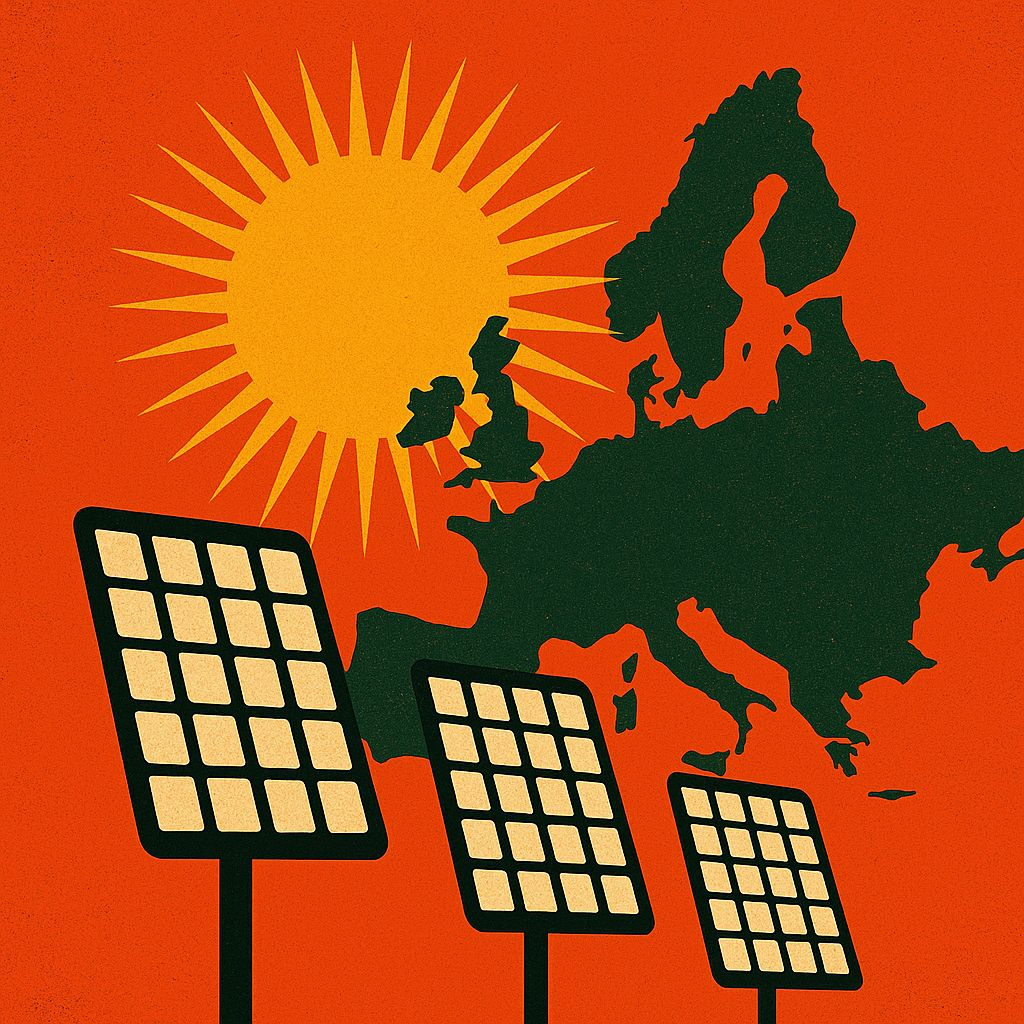
Europe is entering a once-in-a-generation opportunity in solar power. What was once viewed as a supplementary energy source is rapidly becoming a central pillar of the continent’s energy security, industrial strategy, and climate resilience.
Across the EU, three forces are converging: falling technology costs, policy pressure to decarbonise, and a renewed focus on energy independence. Together, they are accelerating solar deployment at unprecedented speed.
1. The fastest-growing energy source in Europe
Solar PV is now breaking annual installation records. Countries like Germany, the Netherlands, Spain, and Poland are leading the charge, with utility-scale and rooftop systems both expanding rapidly. Even Northern Europe—once considered too cloudy—is closing the sunlight gap thanks to improved panel efficiency and smarter grid integration.
2. Solar is now the cheapest new power source
Levelised costs of solar have dropped more than 80% in a decade. For European businesses, this translates into lower operational energy costs and reduced exposure to volatile fossil-fuel markets. For households, it means affordable generation and rapidly decreasing payback periods.
3. Greater resilience and energy independence
Recent geopolitical shocks have reshaped Europe’s energy priorities. Solar offers a decentralised, domestically controlled power source that strengthens resilience and reduces dependency on imported fuels.
4. A new industrial opportunity
Europe is investing heavily in solar manufacturing, battery storage, and grid modernisation. The push for local production—cells, modules, inverters—signals the EU’s intent to become more competitive in clean-tech supply chains.
5. Solar + Storage = the next revolution
As battery prices fall, pairing solar with storage will allow households, businesses and whole regions to stabilise supply, support the grid, and unlock 24-hour clean energy.
⸻
The Bottom Line
Europe’s solar potential is no longer theoretical—it’s actionable, scalable, and economically compelling. The technologies are ready. The economics make sense. And the urgency has never been greater.
The next decade will determine whether Europe becomes a global clean-energy leader or a follower. Right now, all signs point to leadership.